


The Three Tactics That Are Actually Driving Charter School Enrollment
Every charter school leader is seeing it: declining birthrates, federal immigration policy, and increased school competition are complicating the enrollment landscape.
Some schools have been weathering these events better than others, but even if a school is meeting its numbers, the fact remains that enrollment is not a given.
If there is an enrollment “insurance policy” it’s to continually pay attention to and build on those processes that are making enrollment happen.
So, as we enter the coming school year, I want to share what we’ve been seeing from our own charter school clients that has helped them meet or surpass their enrollment targets – three practical tools that you can put into play in your own school right now. They are:
- Community-centered marketing
- Balancing traditional and digital advertising
- Leveraging the website for story and search
********************************************
1. Tailor Your Marketing to Your Community
Formal, funded charter school enrollment marketing is a relatively new phenomenon. So, it’s not surprising that when a school begins to advertise, the instinct is to just “get the name out there” and families will come. But this approach overlooks the very headwinds – specifically heavy competition – that those ads are meant to overcome.
A charter school’s strongest asset is its role within its community. Your school is the safe harbor; it’s the place where students not only come to learn, but benefit from the unique offerings that only you can deliver. Advertising, marketing and outreach – both traditional and digital – needs to not only speak to these benefits, but do so at the community level in order for families to truly engage.
A great example here is our client LION Charter School. As a pillar of the Hunt’s Point, Bronx community, LION emphasizes leadership and responsibility and they showcase the local impact of that approach. They do this by:
- Highlighting community engagement and local partnerships
- Speaking about Hunt’s Point and their role in its growth
- Elevating local voices so that families see themselves reflected in the school
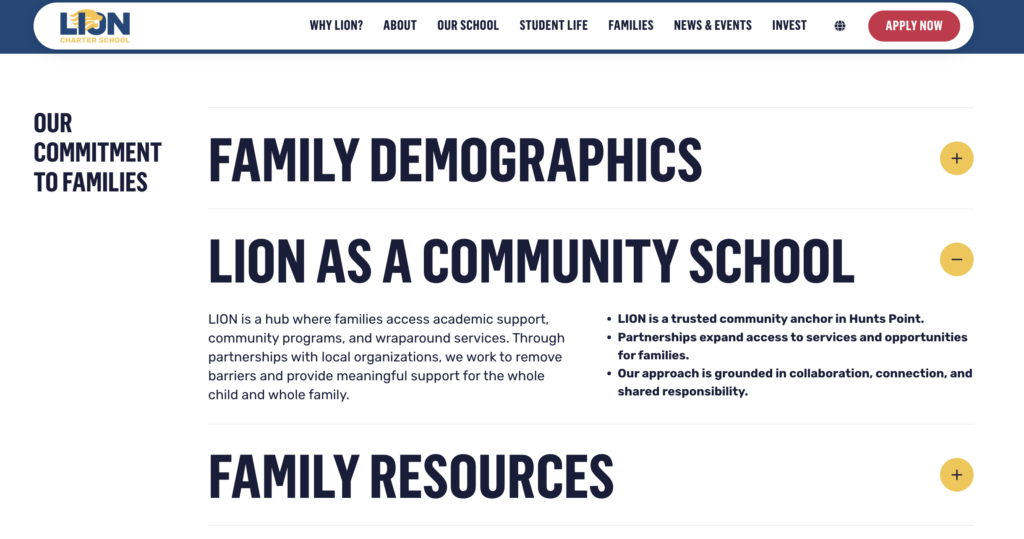
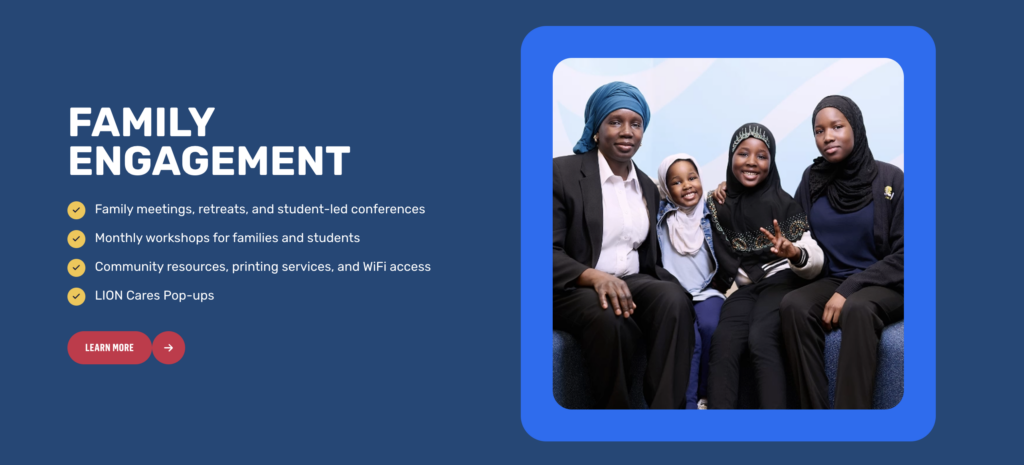
LION consistently meets its enrollment goals. They’ve done so by providing a stellar educational experience – but also by speaking plainly and directly to their community. This reinforces familiarity and safety, which in turn supports the greatest attribute of all – trust. And trust leads to enrollment.
And the added benefit? Since they’re drawn from the local community, LION students are more likely to stay enrolled.
2. Invest in Both Traditional and Digital Outreach
For several years now, we’ve been assisting an amazing New York-based charter school with their enrollment outreach. With each cycle, we’ve seen strong application volume translate into consistent enrollment. Except that is, for one critical 2-month period earlier this year.
In addition to the digital enrollment campaigns they do with us, the school historically spent a portion of its ad budget on local print and outdoor advertising.
We were at a loss. Why would applications suddenly just drop when we hadn’t done anything differently for those two months? But when the client dug a little deeper, we found the culprit: in the months that had experienced the drop in applications, the school had pulled back on their traditional, off-line advertising.
The absence of those transit and outdoor ads was enough to undercut exposure of the school at a critical time in the enrollment cycle. The numbers didn’t crater – but they also didn’t maintain the momentum we were all used to.
The lesson here is that – budget permitting – you’ll ideally want to invest in both traditional and digital advertising. Here’s why:
Traditional Marketing – print ads, outdoor/transit ads, local, in-person presentations, etc. provides what’s called “Top of Funnel” awareness. It provides families with the initial familiarity and name recognition that sets the stage for further learning and inquiry.
Digital Marketing – social media ads, social posts, emails, etc. provide the direct and tailored messaging to individual prospects that prompt them to learn more or even apply.
Can you get enrollment results by doing one but not the other? Sure; but it’s much more powerful when both tactics work in combination – the parent or guardian that sees the outdoor ad on their daily commute, and then receives the “apply now” ad on their phone is way more likely to take action.
And this is not to say that your school needs to place funds it doesn’t have into a massive dual-track marketing program. Traditional marketing specifically, can be addressed through grassroots means: family referral incentives, tabling at community events, partnerships with local nonprofits and so forth. The goal is to achieve both a consistent familiarity with the school and then “close” using targeted (here, digital) means.
3. Leverage Your Website for Story and Search
Over the last few years, the website has gotten a bad rap. Apps, social media, and now AI are getting all of the attention. And the truth is that these platforms do generally get the bulk of the eyeballs.
But when it comes to charter schools, it’s the website that’s taking center stage. And it’s not even close.
Families want to learn about your school—your curriculum, your teachers, your outcomes. While they do engage on your social channels, they’ll go to your website for in-depth learning and validation. Your website is typically the final stop enrollment prospects make before they actually apply.
But here’s what truly makes the website so special: it’s not just where families learn about you—it’s how they find you in the first place.
Right now, Google accounts for over 90% of all searches on the web. When a parent or guardian researches your school, they’re starting with Google. But here’s where it gets interesting.
Google now uses AI to answer search questions directly. Rather than showing a list of links, it shows families a single, comprehensive answer to their query about your school. And where does Google pull that answer from? Primarily your website.
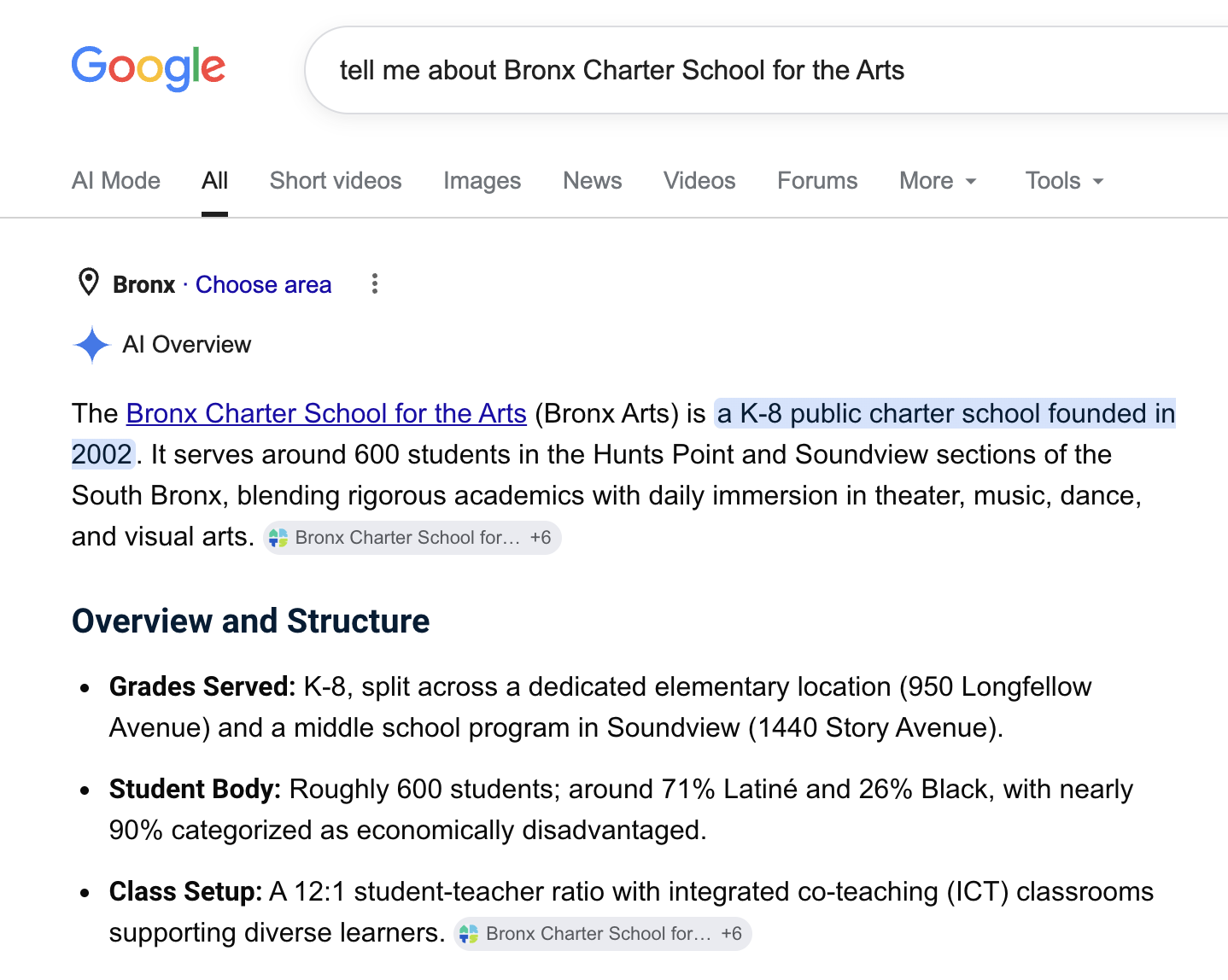
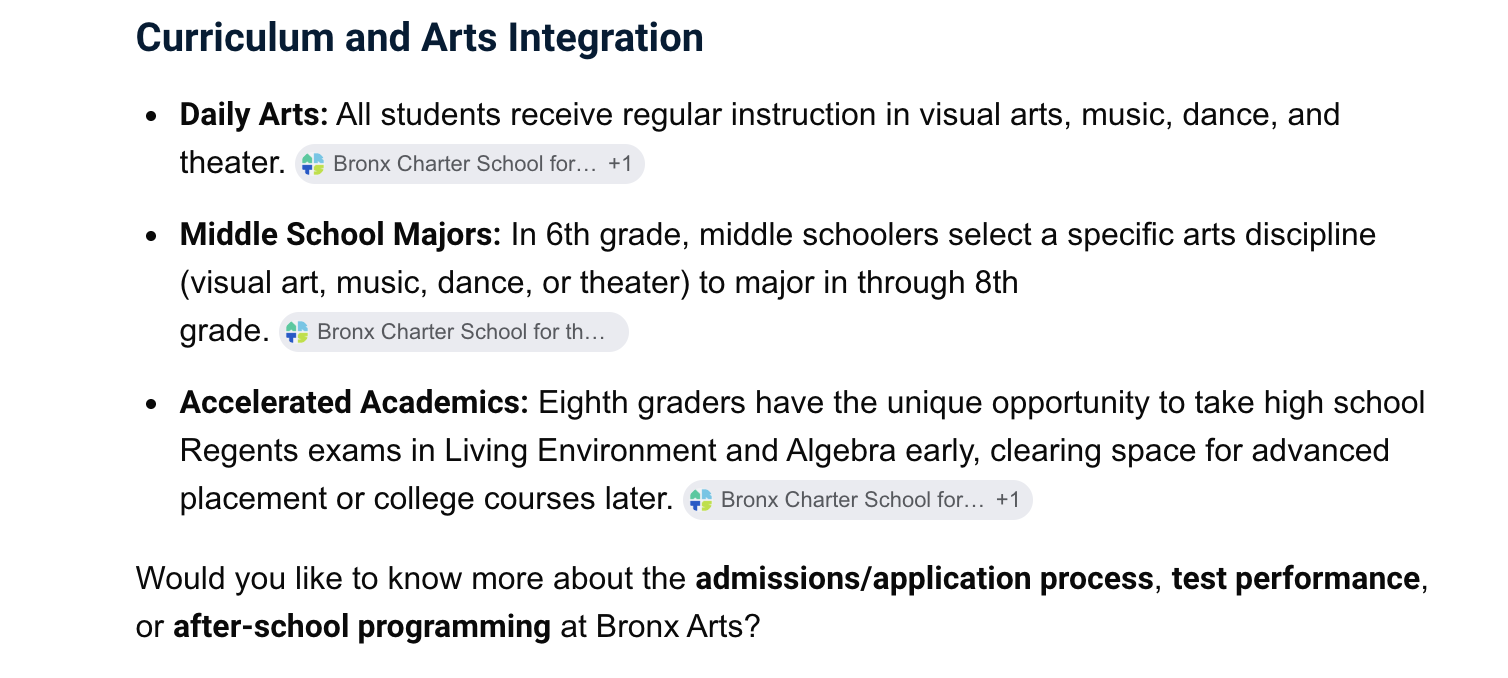
(When you search ‘Bronx Charter School for the Arts,’ Google’s answer pulls directly from their website—their mission, their programs, their story. That’s the first impression families get.)
This is different from social media. If a parent searches for you on social, they might find scattered posts. If they ask an AI chatbot like ChatGPT, they get mixed results from various sources. But Google—the search engine most people use—prioritizes and elevates your website’s own story about itself.
Which means: Your website is your enrollment frontline. Invest in making sure your community’s story is discoverable, compelling, and clear.
**************************
So that’s what we’re seeing. Market with your community in mind; think both digital and traditional outreach, and invest in a quality website. Three things your school can do right now to increase your chances of both applications and enrollment.
Yes, the headwinds are real. But tactics like these are entirely in your control. Start slowly and build consistently — over time you’ll be pleasantly surprised with the results.